

The Benefits of a Power Mobility Scooter
A power mobility scooter can help you maintain your independence when walking is too difficult. It can also save energy to make daily activities more comfortable.
In your initial appointment, your physician will assess your potential for mobility scooters and chooses the best model that will meet your requirements. Then you can choose from a wide range of features and accessories to make your scooter.
Seating
A power scooter could provide freedom of movement if you're required to travel for short distances. Whether you're out to run a few grocery stores or head down to the local coffee shop it can make it much simpler instead of relying on your family members to help you or taxi services.
Mobility scooters tend to have larger wheels and higher weight capacity than power wheelchairs. They are therefore able to handle difficult terrain and steep hills better than a power wheelchair. This is important for some users, since they can feel more confident about their abilities to travel without a vehicle or permit.
Seats on scooters vary between models, however, they all come with some type of adjustment. Swivel seats are common as are adjustable foot platforms that can be adjusted to height to meet different needs. There are models with features that can be powered, such as a tilt, recline and elevating leg rests. This can improve the positioning, redistribute pressure and be beneficial for people with back issues.
The majority of scooters utilize a tiller steering system that requires an arm and shoulder strength to operate. Controls can be adjusted to individual needs, and some models feature a delta-control for more precise tiller movement. Some models have headrests and a seat belt to ensure safety and comfort.
A scooter may not be as efficient as a car, but it can still allow you to move around in a reasonable amount of time. This allows you to enjoy your day without feeling trapped at home. Most models are water-resistant, so you can use them around in rain. We suggest protecting it when not in usage to protect it from damage caused by moisture.
Like any other motor vehicle scooters will require regular maintenance to ensure it remains in operation as designed. This includes servicing of the tyres, battery and alignment. A professional can help you determine the best maintenance schedule for your scooter model to get the most value from it.
Adjustable Footrests
You may require a footplate that is adjusted to allow greater knee angle when your medical condition hinders knee bend. It is installed by placing it on the foot rest support plate with no tools required. Certain models adjust automatically to the angle of the rider's leg. Customized fixtures can also be installed to meet your needs.
A standard static footrest can be adjusted to a variety of angles but doesn't always meet the requirements of some clients. This could be due to an insufficient strength of the extensor or tight hamstrings. It could also be due to orthopedic asymmetries that hinder the foot from being aligned properly with the standard footplate.
There are a variety of different types of footrests that can be adjusted for power wheelchairs to solve these issues. A leg rest that is elevated is one example. It can be set to a fixed angle which will offer the same positioning for both feet. This type of legrest could be helpful for users who are unable to bend their knees. It also gives an even position that can help reduce pressure ulcers, pain and health risks.
Another option is an articulating leg rest that is positioned at the knee joint and supports the leg in a variety of positions that include abduction and adduction. This is a great option for those with an inclination to windswept which causes one leg to be abducted while the other is abducted. This type of legrest can be used to aid in hip or thigh adduction, as well as abduction, based on the person's requirements.
Some people choose the three-wheeler because it has an enlarger radius of turning, making it easier to move in areas that are crowded. Some people choose the four-wheel model due to the fact that they can travel faster and go further with one charge. The duration of time you spend on your scooter and the distance you have to travel each day will influence your decision.
If you're buying a power mobility scooter, it's important to have documentation of your medical need for the device. This can be either an official medical necessity letter or an authorization form for Mobility Devices. Make sure you include the HCPCS codes and modifiers that are applicable. In supplemental resources , you'll want to ensure that all other insurances have been exhausted. This includes Medicare and Medicaid as well as private insurers.
Lightweight
A mobility scooter powered by electricity is an excellent alternative to a wheelchair, but its size and weight can make it difficult to manage for some. It is crucial that potential buyers understand the weight limits of these vehicles to plan for storage and transport. The overall weight of motorized scooters is influenced by a variety of factors, such as the materials used in its construction, the battery size and any accessories like lights or baskets. The weight capacity of the rider can also affect the weight of the scooter as higher capacities require bigger batteries and motors, which add to its overall weight.
The majority of mobility scooters are heavier and carry an maximum weight of 440lbs. Many models come with capacities of up to 77 kg. The majority of these vehicles have some form of tiller, which has forward/reverse control as well as speed controls, and anyone who is considering using one must ensure that they are able to comfortably operate the control system.
In general the majority of cases, these scooters are made for outdoor use and can be driven on rough terrains like gravel, sand or carpets with plush surfaces, and they are also able to reach speeds of up to 125 mph. Some even have suspension on all four wheels for an enhanced ride and improved handling capabilities.
It is essential to keep in mind that scooters are not a substitute for walking. Instead, it would be best to consult an occupational therapist or a doctor to determine the amount of exercise one should get every day. Some people may use a scooter instead of walking to get around, which could result in overweight and poor physical fitness.
It is also essential to store a scooter in a proper manner when not in use since this will extend its life and ensure it is in good condition. Dedicated indoor spaces like a shed or garage are ideal, while wall-mounted racks are perfect for smaller living spaces. Some mobility scooters have folding options, allowing them to be collapsed to store them in a convenient manner. This is especially useful when you travel with a vehicle.
Folding
A power scooter is a great option for those who want to move around but have trouble walking long distances or require assistance with a wheelchair. They are made to be used outdoors and have a joystick or handle to control them. They can travel quickly, reaching 15 or 16 km per hour. They are generally less expensive than power chairs and are more convenient to store. The majority of models foldable or collapsible, which makes them easier to transport in vehicles.
Some drawbacks of mobility scooters are their length, which limits their ability to fit in lifts and elevators specifically made for wheelchairs, or in public buildings with narrow hallways and bathrooms. They are less stable than wheelchairs and might not be suitable on rough or uneven terrain.
The number of wheels makes a distinction between scooters and wheelchairs. Most scooters come with three to four wheels, whereas power chairs are equipped with at minimum six wheels. They typically come with two large drive wheels as well as one or more smaller wheels called casters which offer stability. To protect against damage, the wheels are usually covered with rubber.
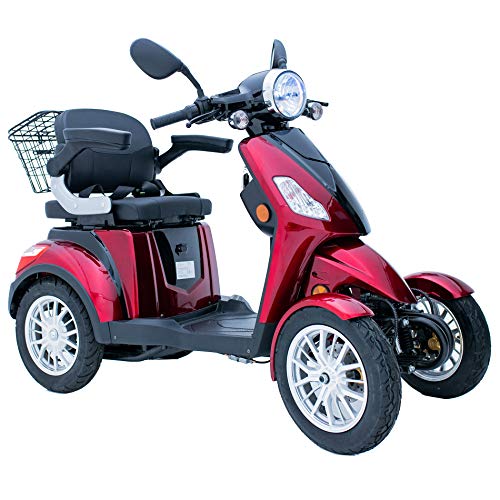
When choosing a power scoot, it is important to think about its ability to turn and whether or not it can be driven on smooth surfaces like sidewalks. Some scooters can navigate obstructions and curb cuts, while others need a manual ramp or other assistive devices to access.
If you're considering buying mobility scooters and want to make sure that the dealer has different models on hand to test and compare. Ask them about their warranty policy and whether they offer a rental option to help you decide if this is the right product for you.
You should also think about whether Medicaid covers the cost of a scooter and what requirements you must meet to qualify. For example, most states require a doctor's recommendation that you have a medical need for this kind of mobility aid. If you can't afford a scooter, many manufacturers offer financing options.